

Some Thoughts on Interplanting: Why Chaos is Better
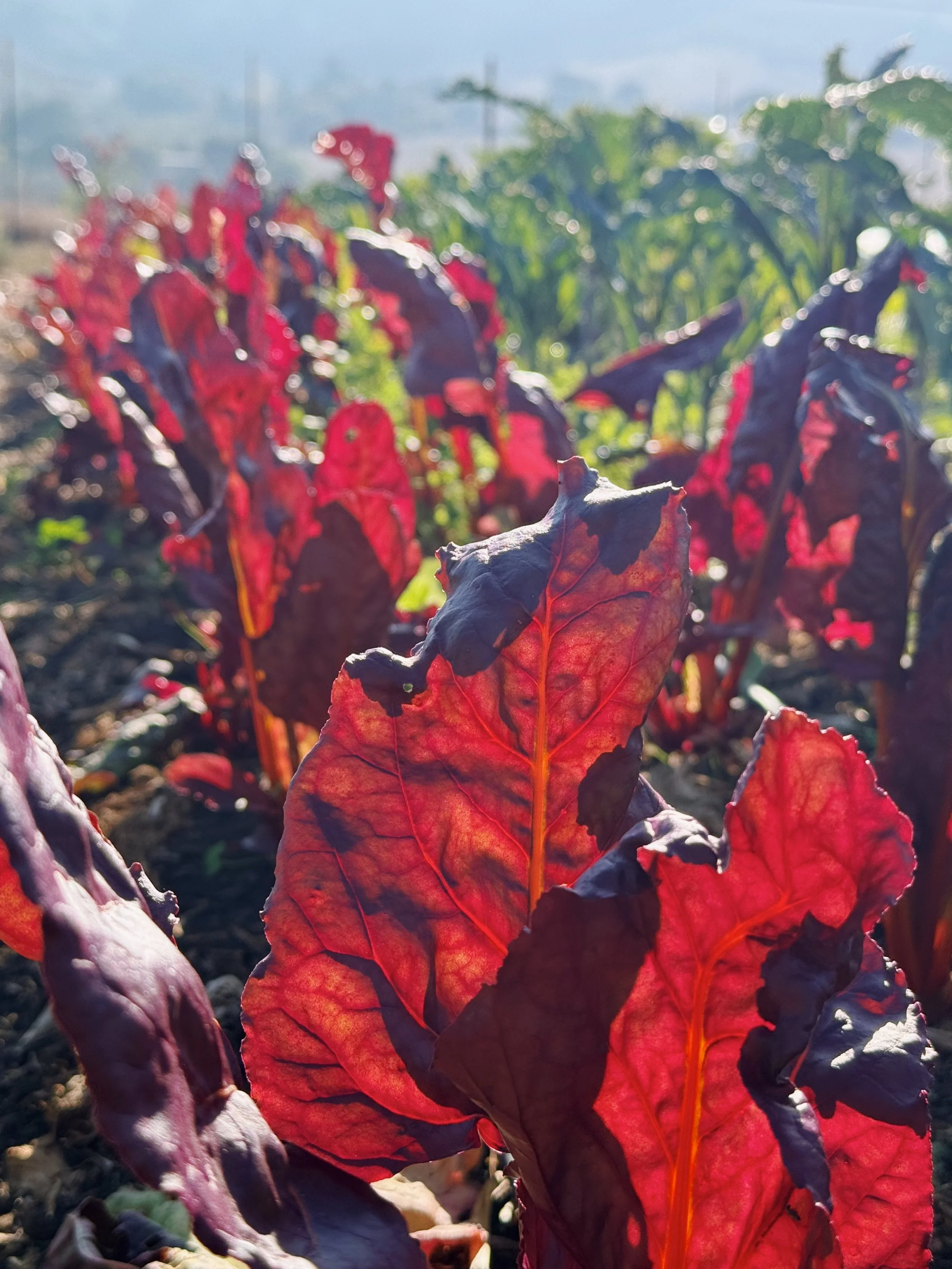
We often get the question: why do you plant more than one crop in a bed?
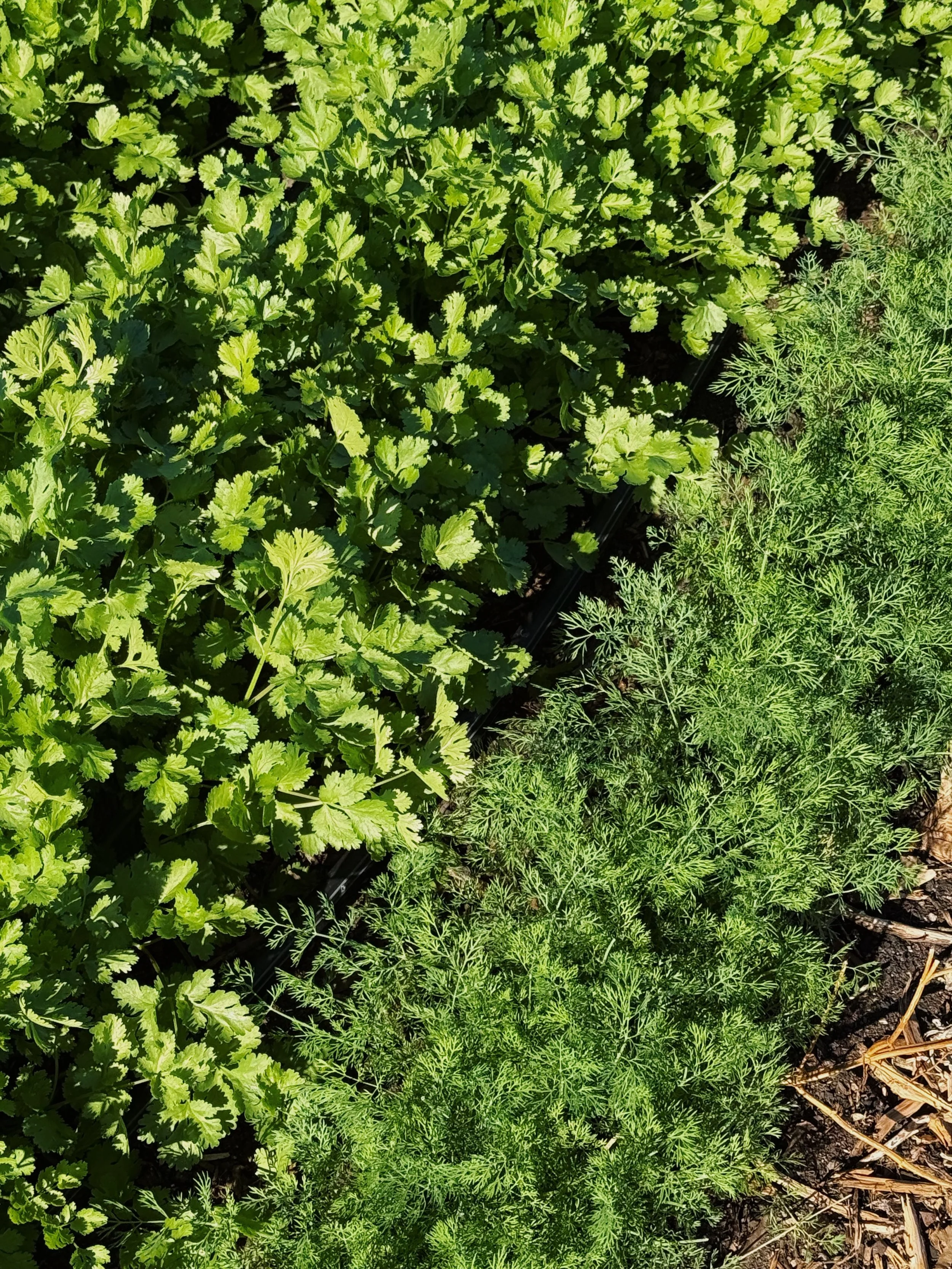
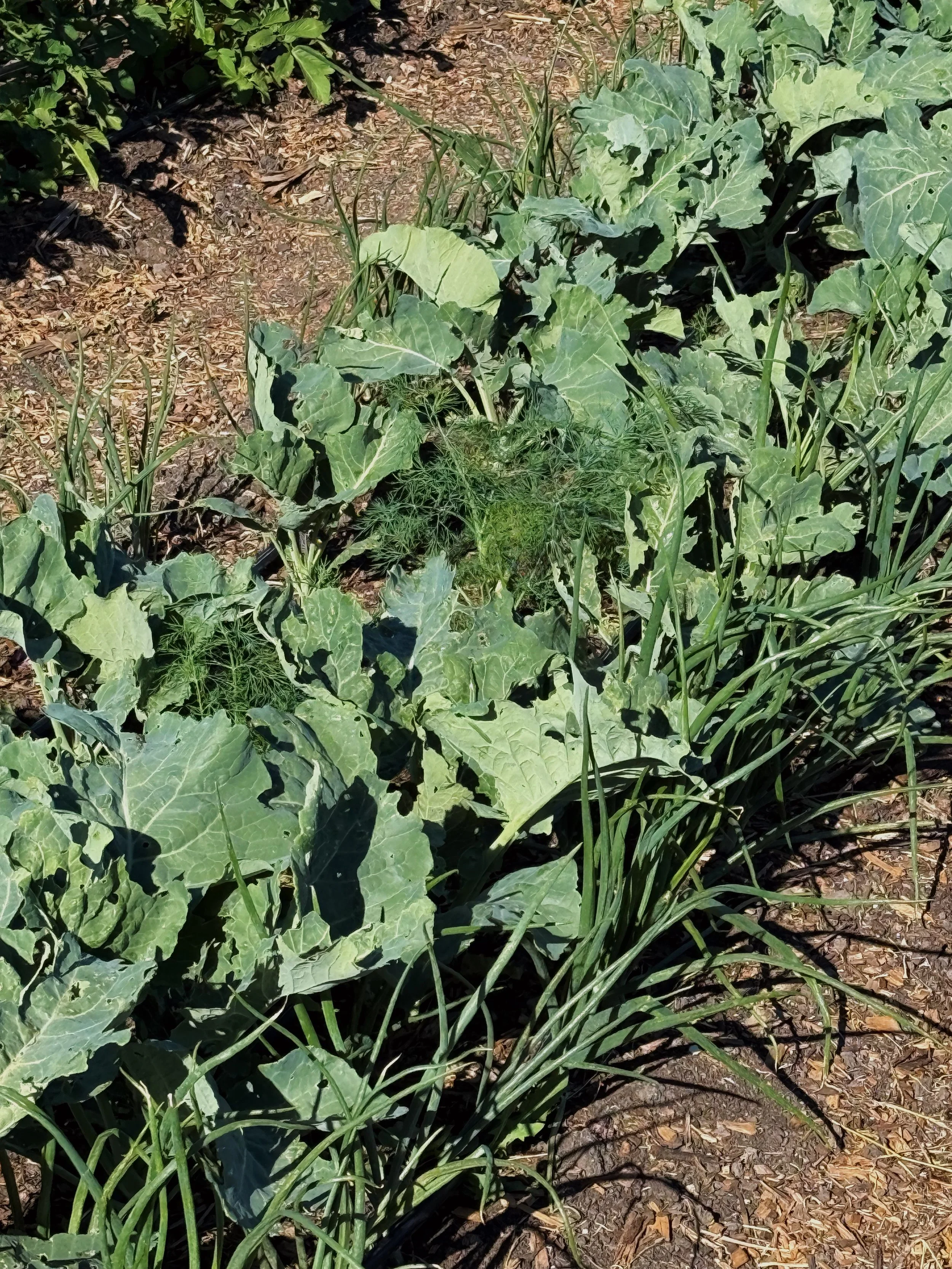
You’ll see dill, cilantro, and spinach sharing the same bed; beets and Napa cabbage intermingled; perennial clover growing green under chard and kale; and lettuce planted between peppers and onions between cauliflower.
We do this mostly to maximize space. In our small operation, it’s hard to use an entire bed of the same crop when everything reaches maturity at once. Instead of growing 200 square feet of cilantro, for example, we break it up into thirds, planting a few rows each of cilantro, dill, and spinach. That way, we have a little more diversity coming ready at different times.
It adds more diversity to our farmers market table, but it also adds diversity to the garden. And that diversity can have ecological benefits. Growing a diverse garden can be one part of an integrated pest management strategy. Different crops interact with insects and other organisms in different ways, and interplanting can make it harder for some pests to find and concentrate on their preferred host plants. Intercropping can increase beneficial insects and, in many situations, reduce pest abundance compared with monocultures, it’s one of the reasons we like having a little more chaos in our beds. This way, bare ground always stays covered with photosynthesizing productive plants!
There’s also a fascinating world happening below the soil. Different plants release different compounds from their roots, called root exudates. These can include sugars, amino acids, organic acids, and other compounds that influence the microbial communities living around their roots. Plants can actively shape the microbial community in their rhizosphere, so growing a diversity of plants creates a diversity of plant–microbe interactions belowground.
So, for us, interplanting is partly practical and partly ecological. It helps us make better use of our limited space, protect the soil, spread out harvests, bring more variety to the market, and create a more diverse growing environment!
TO DO LIST
Other than our usual harvest and planting, we crossed a few good things off the to do list!
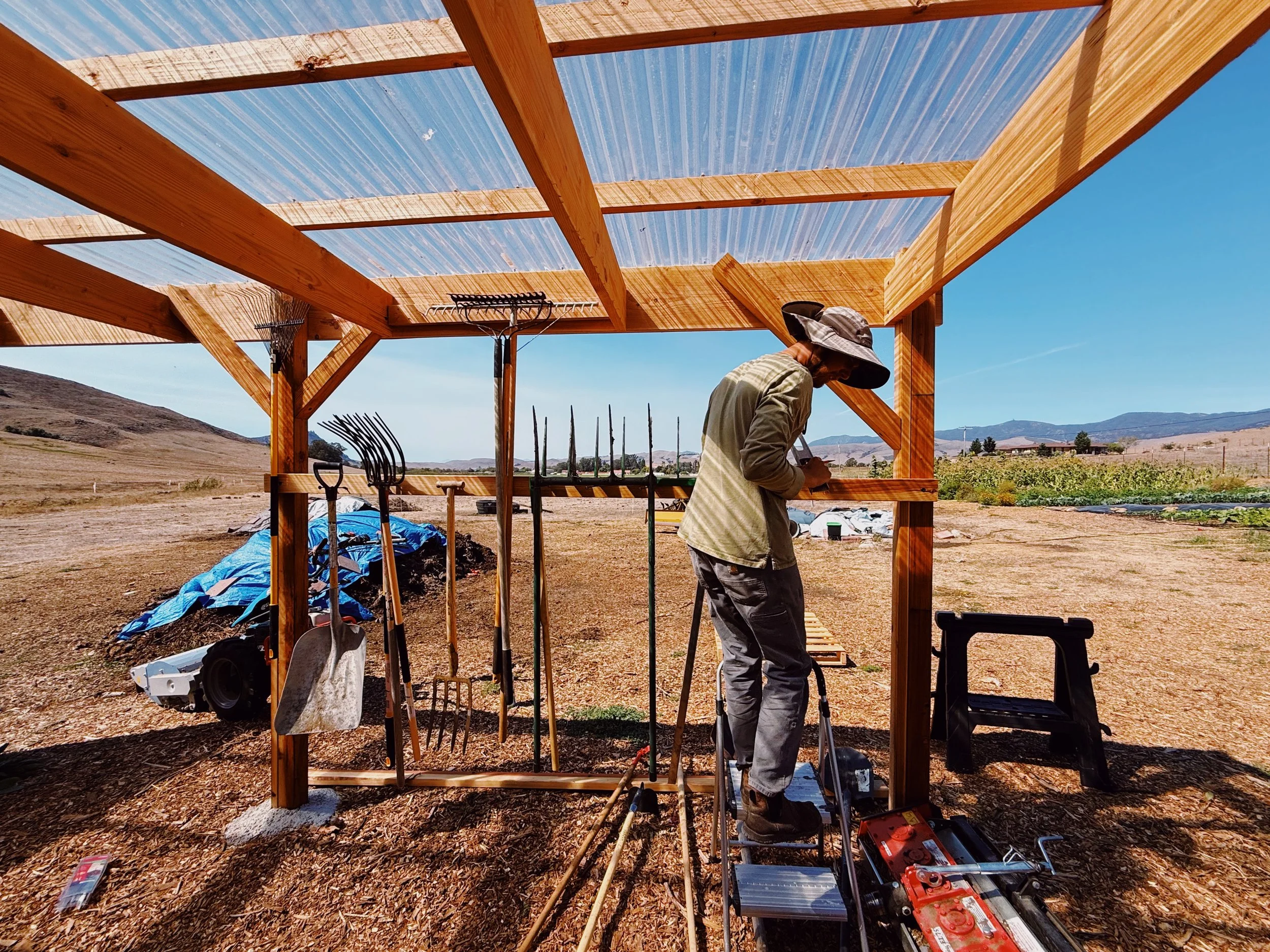
We moved our tools to a more accessible spot and got them all nicely hung up.
We also sent soil samples to two labs as we prepare for cover cropping and fall bed flips. Soil testing gives us a better picture of nutrient levels and other characteristics of our soil, while soil-health testing can provide additional information about things like soil respiration, available carbon and nitrogen, and other indicators of biological activity. These tests are one piece of the puzzle we use to understand what our soil needs.
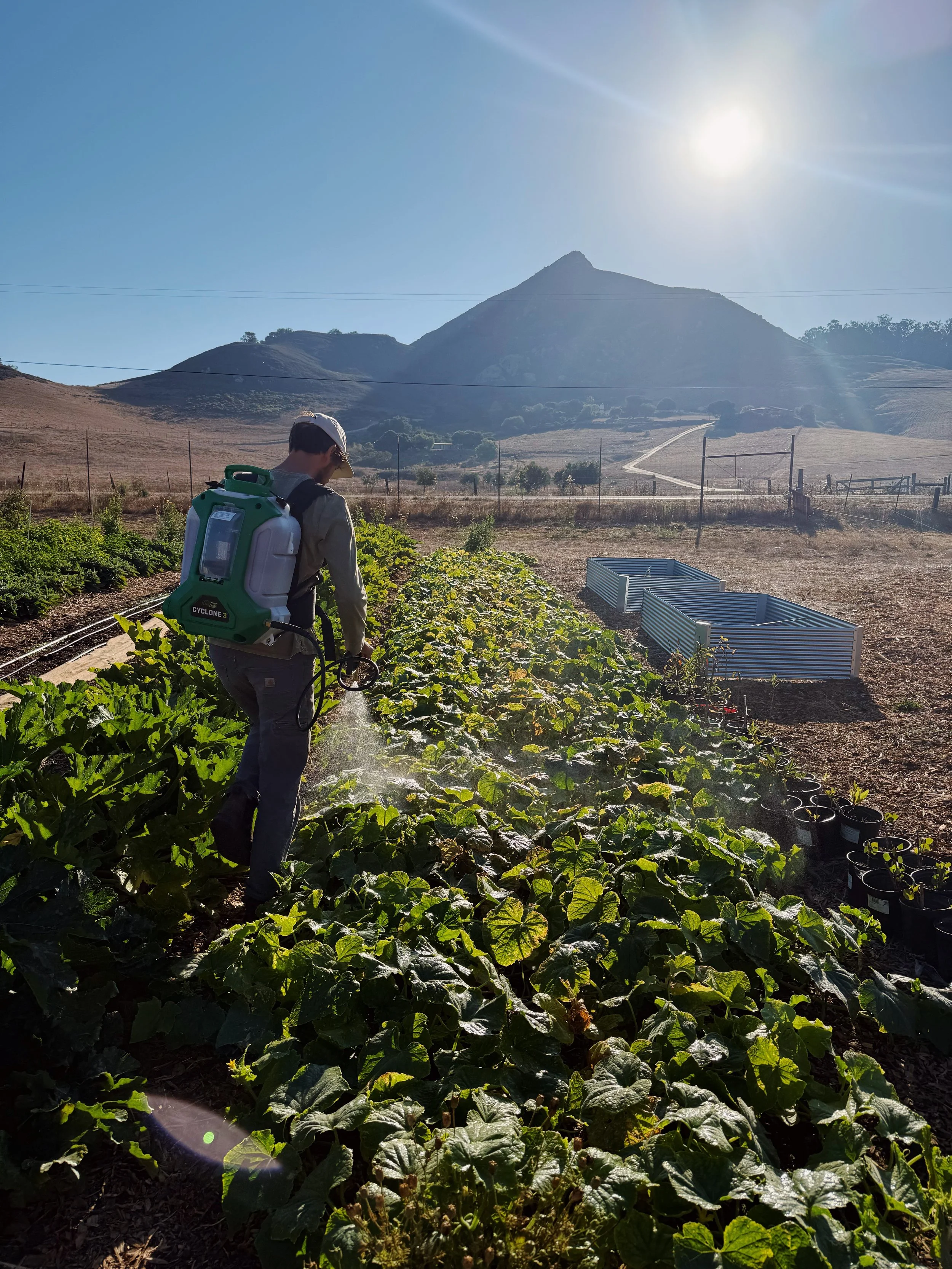
We also made our first batch of foliar spray and used our backpack sprayer for the first time. The mixture includes activated effective microorganisms, molasses, calcium acetate that we made from eggshells, and water-soluble boron. We’ve been experimenting with this mixture through our irrigation system, and we’re excited to try foliar application as another way of getting nutrients to the plants to give them an extra boost while they are fruiting. We’re not agronomists, but it sure feels good to give the plants a little extra attention and hopefully a little more of what they need to provide for us!
PEPPER PLAYERS
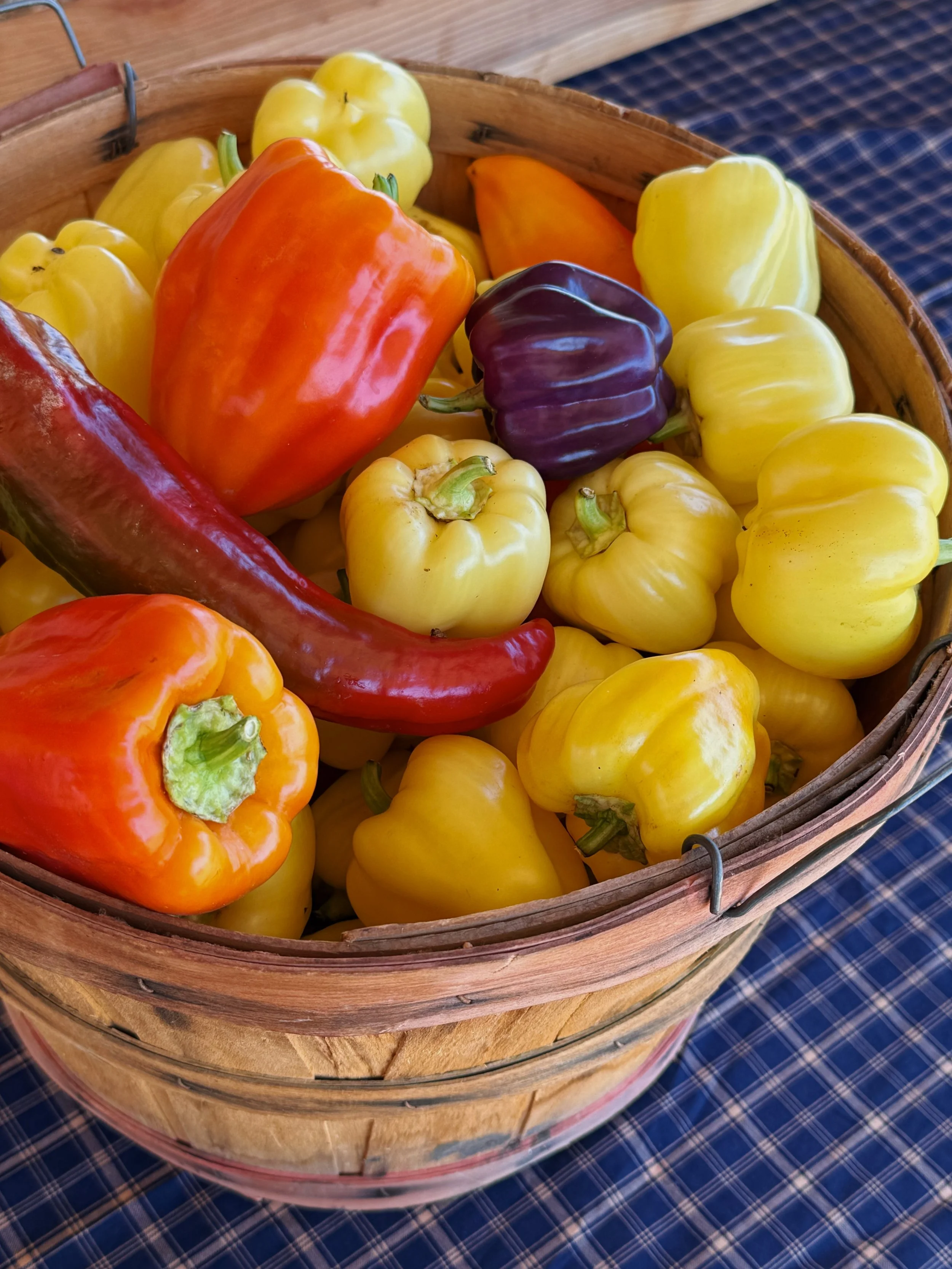
We have three varieties this year, and they are all fantastic.
Iko Iko Bell Peppers are the yellow and purple bells, with a mild, slightly floral flavor. I love them because they’re juicy and refreshing, and they’re great for salads, stir-fries, or eating straight out of the garden.
Gypsy Queen Peppers are elongated, tapered peppers that mature from green to a warm orange and eventually red. They have thick, sweet flesh and are great for fresh eating, fajitas, roasting, or really anything that calls for a sweet pepper.
Our Italian Roasting Peppers are the sweetest of the bunch, with huge, deep-red fruits. They’re great for fresh snacking or roasting and are especially good in sauces or paired with tomatoes. Ideas are endless!
THIS WEEK’S HARVEST
Visit us at our Farmstand on Mondays (4-6:30) and see the garden! Find us at the Morro Bay Farmers Market on Thursdays 2-4:30!
Summer Crops
Heirloom Tomatoes - bulk orders are $40 for 10 pounds of any combination of our tomatoes
Paste Tomatoes
Miniature Slicer Tomatoes - perfect for salads
Cherry Tomatoes
Zucchini
Persian Cucumbers
Armenian Cucumbers
Lemon Cucumbers
Peppers!
Edamame
GreensMighty Mix - a nutrient-dense baby greens mix of spinach, kale, chard, and mustards
Roots and Bulbs
Garlic
Mini Daikon Radishes
Carrots (limited)
Fresh Herbs (also available at the Co-op!)Tarragon
Genovese Basil
Thai Basil
Tulsi Basil
Sage
Cilantro
Dill
Thyme
& Strawflower Bouquets!
Thank you for caring about how your food is grown ❤️
Your farmers,
Jake & Jesse :)